

Uncategorized
Mediterranean Interiors: Bringing the Outside In Without the Maintenance
Stone, lime plaster, shutters closed against the afternoon, a floor of old cement tiles — and somewhere in the frame, a tree. That last element is the one people forget when they try to build a Mediterranean interior, and it is the one that makes the whole palette work. Without greenery, the same room reads as merely bare: handsome materials with nothing alive in them.
The difficulty is that the plants belonging to this look are outdoor plants. Olive, fig, citrus, bougainvillea, cypress — built for open sun and dry wind, not a shaded salon with the shutters half closed and the AC running. Which is why so many Lebanese homes and restaurants end up with a Mediterranean shell and a sad ficus in the corner of it.
What makes an interior read as Mediterranean
It is not a style you achieve with a colour. It is a set of textures that all happen to be matte, porous and slightly imperfect: unpolished stone, lime or sand-finish plaster, terracotta, oiled wood, iron, cement tile, linen. Everything absorbs light rather than bouncing it.
Greenery is what stops that palette going flat. Silvery olive foliage against warm plaster, a dark cypress line beside a pale stone arch, bougainvillea sprawling above a doorway — these are the high-contrast moments in an otherwise soft room. Take them out and the eye has nothing to land on.
Why the real versions struggle indoors
Most Lebanese interiors cannot give these species what they need. Olive wants full sun and goes thin and leggy in anything less. Citrus wants sun plus steady humidity and drops leaves the week the AC changes. Bougainvillea flowers on heat and light; indoors it becomes a green tangle that never blooms. Cypress in a pot indoors browns from the inside out.
Add how homes here are lived in — shutters closed through the hottest months, apartments empty for weeks in summer, dry conditioned air — and even a well-chosen real plant is being asked to survive conditions no amount of care fixes.
This is where artificial greenery stops being a compromise. The look depends on these specific species; the room cannot keep them alive. So the species gets built instead of grown.
The pieces that carry the look
The olive tree
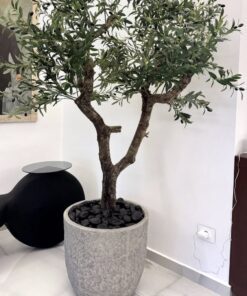
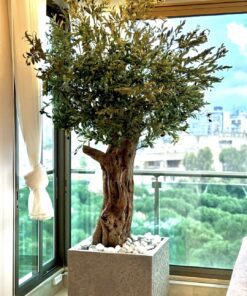
If you choose one piece, choose this one. An olive carries more Mediterranean character per square metre than anything else: silver-green canopy, twisted trunk, open structure you can see through. We build artificial olive trees on real preserved trunks, which is why they hold up at close range — bark records decades of growth and cannot convincingly be moulded. In a plaster-and-stone room, one olive in the right corner does more than a dozen small pots.
Citrus and fruit trees
Lemon belongs to the courtyard tradition of this region, and it brings something olive does not: colour — glossier, darker leaves and the punctuation of fruit, which reads warm against pale walls. Fig gives you the opposite, with big architectural leaves that work well beside a stair or a tall window.
Bougainvillea and climbing colour
Bougainvillea is the piece people underestimate indoors. Trained over a doorway, along a beam, or down from a mezzanine, it puts magenta or coral at height — and softens a hard architectural edge without taking any floor space.
Cypress and vertical structure
Cypress is a line, not a mass — use it in pairs to frame an entrance, or in a row to screen something. It is what makes a terrace read as a garden rather than a balcony.
Get the planter right or the illusion breaks
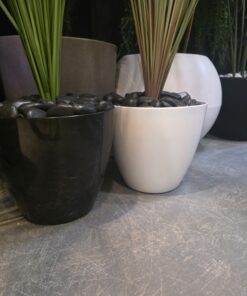
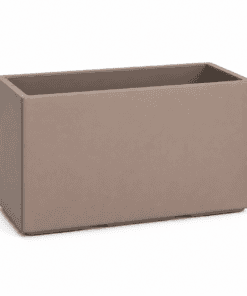
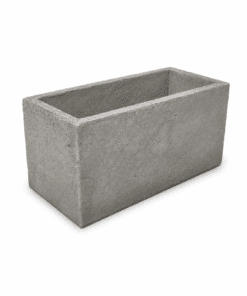
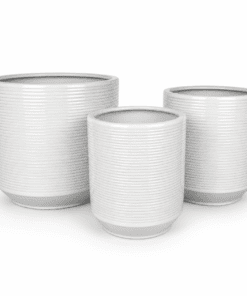
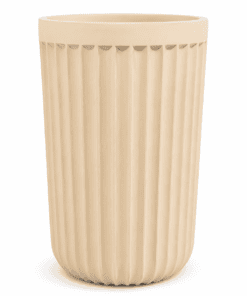
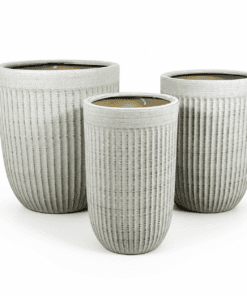
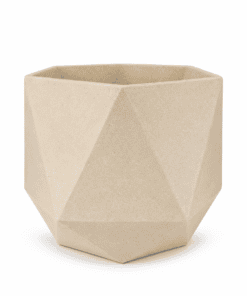
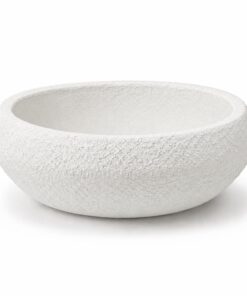
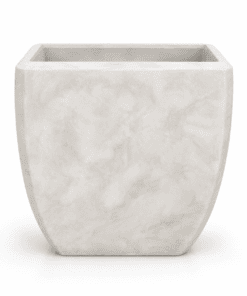
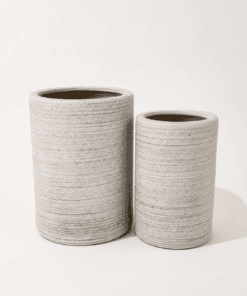
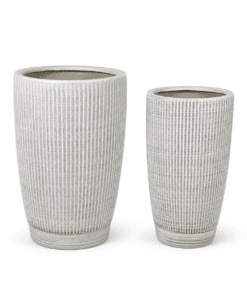
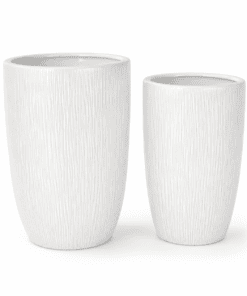
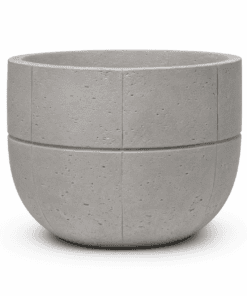
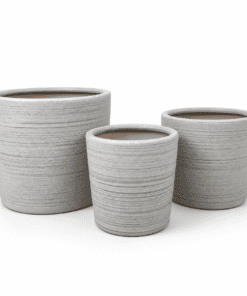
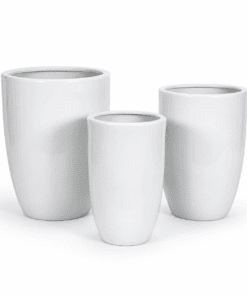
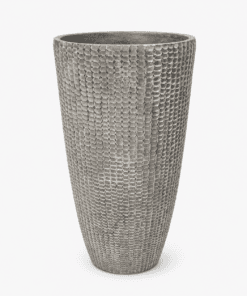
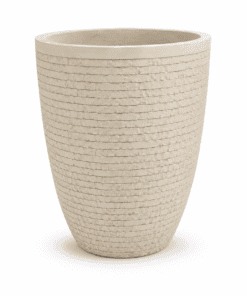
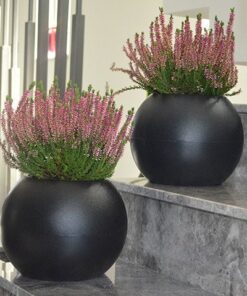
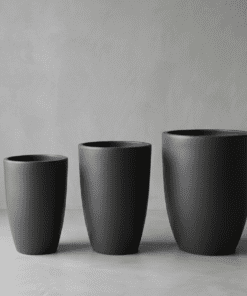
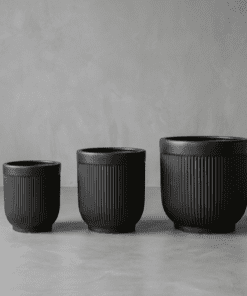
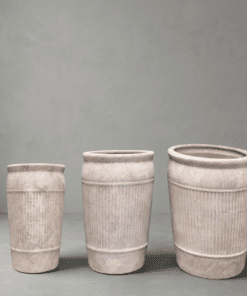
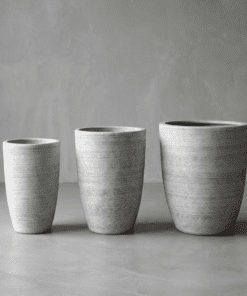
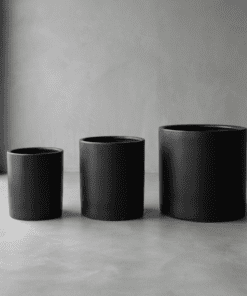
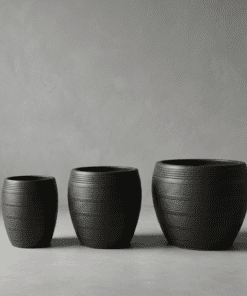
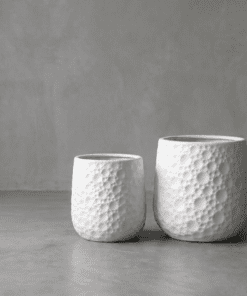
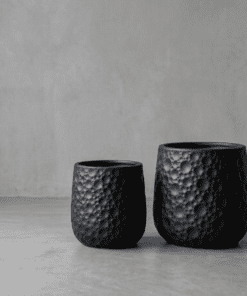
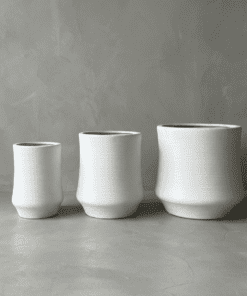
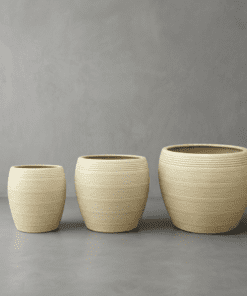
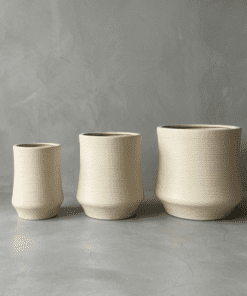
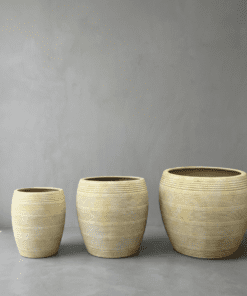
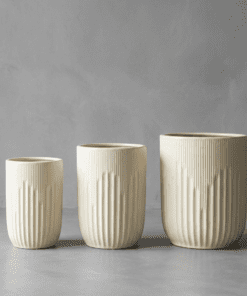
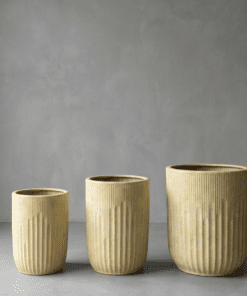
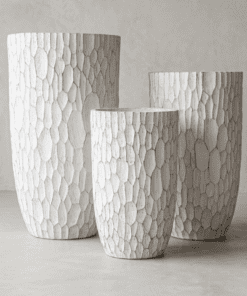
Nothing undoes convincing greenery faster than a plastic nursery pot. Here the container is part of the material story: terracotta, raw concrete, sand-finished fiberglass, aged stone, iron — matte, always. We make custom planters sized to the tree rather than the other way round, because a canopy wider than its base looks wrong in a way people notice without being able to say why.
Carry it through to the terrace
The strongest version of this look does not stop at the door. If the salon has an olive and the terrace outside has nothing, the room ends abruptly at the glass. Matching the planting inside and out — same species, same planter family — makes both spaces feel larger.
Outdoor pieces are a different build: foliage needs anti-UV treatment to hold colour through a Lebanese summer, and the base needs weighting for wind. Settle that before anything is made. The same applies at a larger scale with artificial landscaping for courtyards, roof terraces and villa entrances.
Scale: fewer, bigger
The most common mistake in Mediterranean-style interiors here is too many small plants. Courtyard architecture in this region is built around one or two significant trees and a lot of generous empty floor. Three large pieces beat fifteen small ones every time. Because we make everything to measure, a tree can be built to a specific ceiling height and canopy width rather than chosen from whatever a catalogue stocks — see our custom artificial trees page.
Frequently asked questions
Will an artificial olive tree look fake in a bright, minimal room?
Bright rooms are the hardest test, which is why the trunk matters so much. A preserved natural trunk gives real bark, taper and irregularity at close range, and the canopy is then built for density so it does not read as a uniform block. Flat, even canopies are what give cheap trees away — not the fact of being artificial.
Can the same tree go indoors and outdoors?
It should be specified for one or the other. Outdoor pieces get anti-UV foliage and extra weighting; an indoor tree moved permanently onto a sunny terrace loses colour faster than one made for the job. Tell us where it is going before it is built.
How long does a custom tree take?
Custom trees generally take around 20–25 working days, since the trunk is selected and the canopy built for your dimensions. Pieces already in the showroom can go out sooner.
Start with the room you have
The simplest way to begin is a photograph. Send a picture of the space, with some sense of the ceiling height and the wall finishes, and we can tell you which pieces the room actually needs — often fewer than people expect.
Message us on WhatsApp or use the contact page. Everything is made in our own workshop in Jdeideh, Metn, and we deliver and install nationwide. The showroom there — facing St. John Greek Orthodox church — is open if you would rather see the trunks and foliage in person first.