

Uncategorized
Artificial Bonsai: Small Pieces With Outsized Presence
Bonsai is the only tree people lean in to look at. Everything else in a room is read from across it — a two-metre olive in a corner, a green wall behind a bar, a palm by a pool. A bonsai sits at eye level, an arm’s length away, on a desk or a shelf or the end of a counter, and it gets inspected the way a watch or a piece of ceramic gets inspected. That changes almost every decision behind building one.
Why a small tree is harder than a large one
Scale usually forgives. At four metres the eye reads a silhouette and a mass of foliage, and small faults vanish into the shape. At forty centimetres there is nothing to hide behind: every branch junction is visible, and so is whatever holds the trunk in the pot.
A bonsai therefore tests the parts of the craft that large pieces let you get away with. The trunk has to taper convincingly from base to apex. Branches have to thin as they move outward, heavy ones low and fine ones high — the reverse looks wrong immediately, even to someone who has never thought about a tree in their life. And the foliage has to sit in distinct pads with gaps between them, not one continuous green cloud, because that layered structure is what reads as bonsai rather than small bush in a dish.
What goes into a convincing piece
The real advantage of making these in our own workshop in Jdeideh is that a bonsai can be built around a preserved natural trunk and real branch wood rather than a moulded form. Bark at close range is unfakeable — the splits, the knots, the deadwood, the asymmetry where a branch was lost years ago. That is a record of growth, and nobody sculpts it convincingly at this size.
From there the work is hand-setting foliage: a leaf size in proportion to the trunk’s girth (oversized leaves are the usual reason a small artificial tree looks like a toy), each pad built separately, gaps left to let light through the canopy. Then the trunk is weighted into the planter and the soil surface finished — gravel, moss, a stone — because a bare fixing plate undoes everything above it.
Styles worth knowing before you ask
- Formal and informal upright — calm and roughly symmetrical; the safest choice for a desk or reception counter.
- Slanting — trunk leaning off vertical, as though shaped by wind. Gives movement to a static shelf.
- Cascade and semi-cascade — foliage falling below the rim of the pot. Needs a pedestal or high shelf to work at all.
- Multi-trunk and forest groupings — several trunks in one shallow planter; the most convincing option for a wide, low space like a windowsill.
Where a bonsai earns its place
The obvious answer is a desk, and it is a good one — but the pieces that get the most comment sit in odder positions. A reception counter with no floor space for anything bigger. The shelf behind a restaurant host stand. A clinic or spa consultation room, where a large tree would crowd the space. A retail plinth that needs life without competing with the product. A meeting-room credenza, which survives the fact that nobody in that room has ever watered anything.
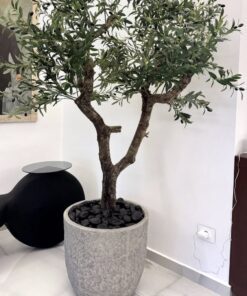
It is also the piece for a room that is already full: if a large olive tree holds the corner, a third big gesture only makes the space noisy. Bonsai work in multiples too — matching planters down a long counter, or a repeated piece in every room of a boutique hotel — and that is worth raising early, because consistency across a set is decided at the fabrication stage.
The planter is half the piece
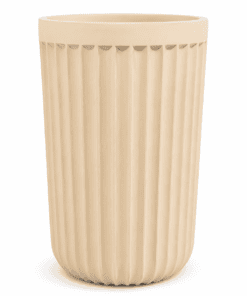
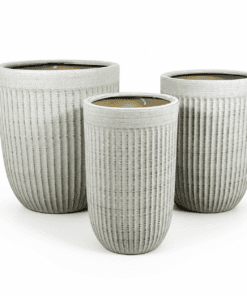
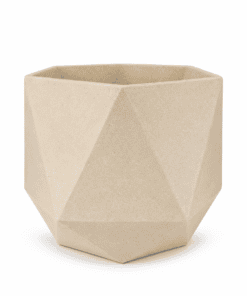
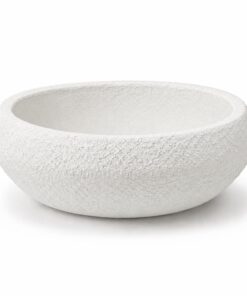
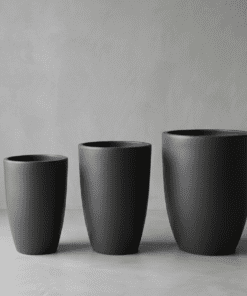
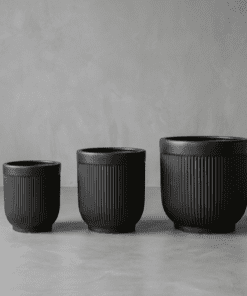
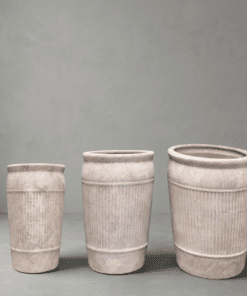
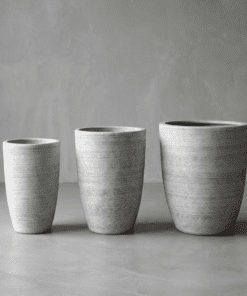
With a large tree the planter is a base. With a bonsai it is half of what you are looking at, and the proportion of pot to canopy is one of the first things that tells you whether a piece was designed or assembled — a shallow, wide vessel for an upright tree, a deeper one for a cascade.
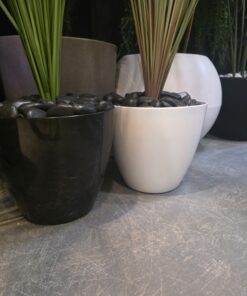
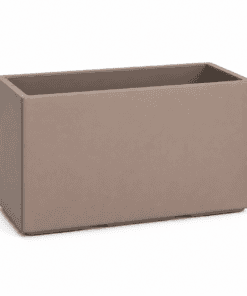
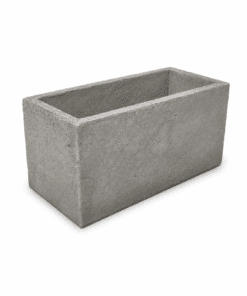
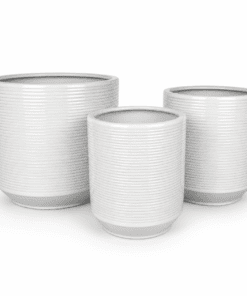
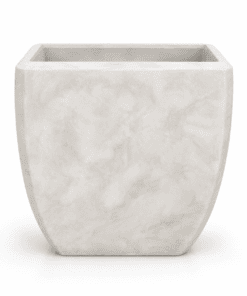
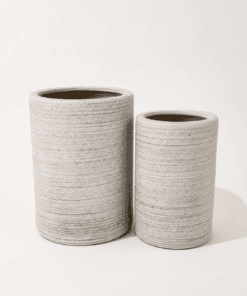
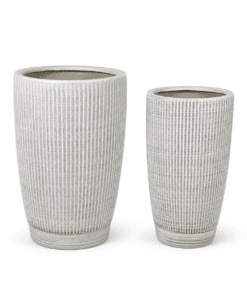
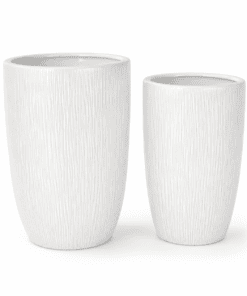
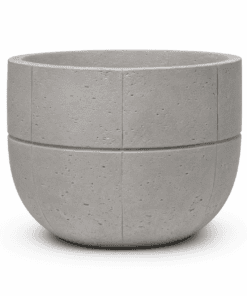
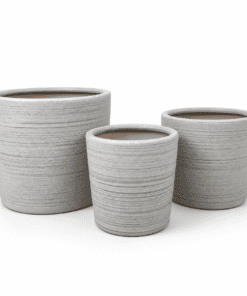
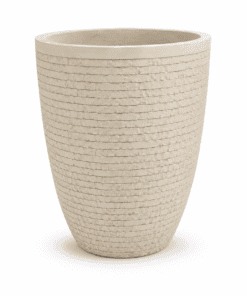
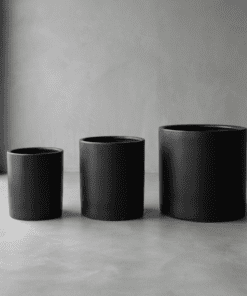
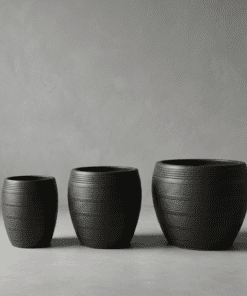
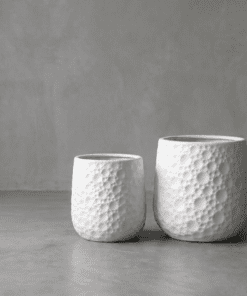
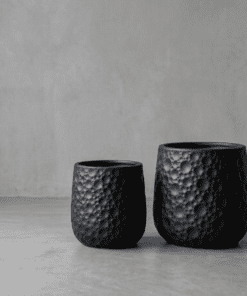
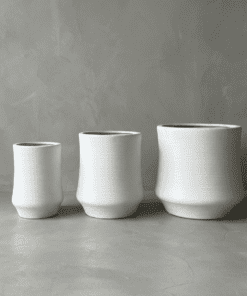
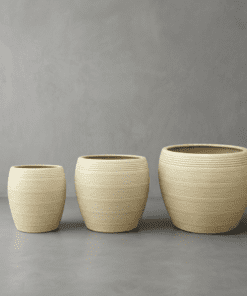
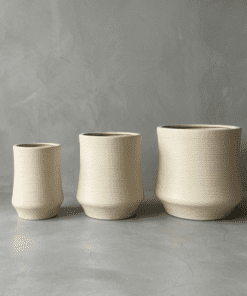
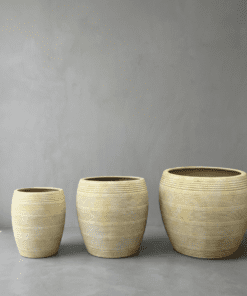
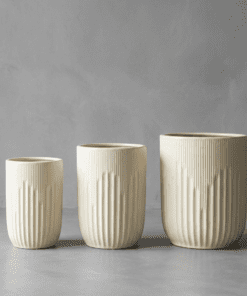
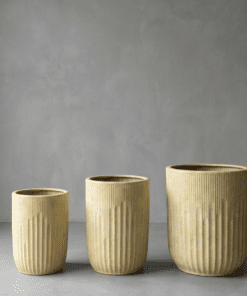
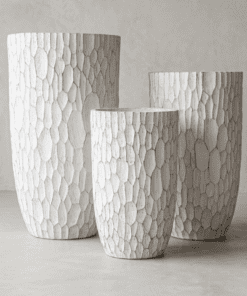
Because we build planters in-house, the vessel is matched to the room rather than to whatever stock size exists: raw concrete for a minimal office, glazed ceramic for a warmer interior, a metal tray for something architectural. For a terrace table or a shaded entrance step, the foliage is anti-UV and the planter built for weather — a different brief from an indoor piece, so say so up front.
Care, honestly
None. No watering, no light, no feeding, no pruning, no repotting — which, for anyone who has killed a real bonsai, is the point. Real bonsai are among the most demanding plants you can own: the shallow soil volume that makes the form possible also leaves the tree days from drying out.
The one thing an artificial piece asks for is dusting, and at this size it is easy: a soft brush, or a hairdryer on cold, every few weeks. Because it sits close to people, dust shows sooner than on a tall canopy.
FAQ
Can you make an artificial bonsai to a specific size?
Yes. Trunk height, canopy spread and planter footprint are all specified to the position the piece is going into. A photo of the shelf or desk with a rough measurement is enough to start.
Do you use real trunks on pieces this small?
Where the design allows, yes. Preserved natural trunk and branch wood is what lets a tree hold up to close inspection — which is exactly what a bonsai gets.
Can a bonsai go outdoors?
It can, if it is specified for outdoors from the start: anti-UV foliage and a planter built to take sun, rain and wind. An indoor piece moved outside will not hold up the same way.
Can you match several pieces for a hotel or a chain of shops?
Yes, and matched sets are straightforward when planned as a set. We deliver and install nationwide; for larger runs see our commercial installations page.
Come and look at one
A bonsai is worth seeing before you commit, because the whole argument for it is how it holds up close. Our showroom in Jdeideh, facing St. John Greek Orthodox church, has pieces on display — and if you want one built to a particular trunk shape, size or planter finish, send a photo of where it is going.
Message us on WhatsApp or use the contact page. Custom trees are typically ready in around 20–25 working days, with delivery and installation anywhere in Lebanon.