



Blog
How to Clean a Dusty Artificial Tree: Tools, Steps and What to Avoid
Oct
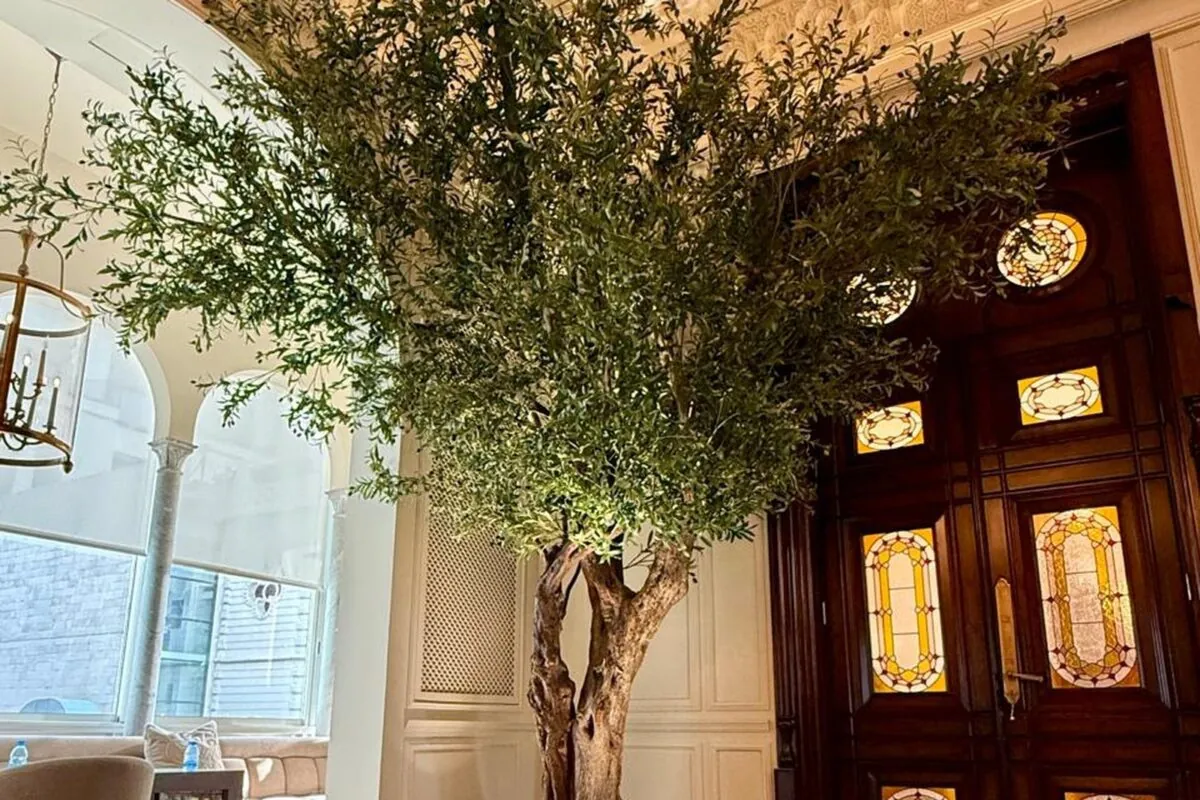
Dust is the only thing an artificial tree asks of you. It does not need water or light, but in Beirut it collects a grey film in a few weeks, and a tree that has gone grey reads as fake from across the room. The good news: a 2 m tree takes about twenty minutes to clean properly, and the tools are already in your house.
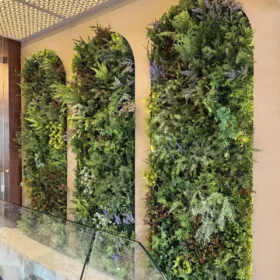
For the weekly care of smaller artificial plants, planters and green walls, see how to clean artificial plants and trees properly.
What you need
- A soft brush: a clean paintbrush of 5–8 cm, a make-up brush or a soft dusting brush.
- A microfibre cloth, dry, plus a second one slightly damp with plain water.
- Moving air: a hairdryer on the cool setting, a small electric blower, or a can of compressed air for fine foliage.
- A vacuum cleaner with the brush head, on its lowest power, for the base and the pebbles.
- A stepladder for anything over 180 cm. Pulling branches down to reach them is how canopies get bent.
Step 1: dry dusting, from the top down
Start at the crown and work downwards, so the dust you knock off does not settle on leaves you have already done. Hold a branch cluster lightly in one hand and brush the leaves outward with the other, in the direction the leaf grows. On olive, areca and jacaranda foliage, where the leaves are small and many, the brush is faster than a cloth. On ficus, monstera and rubber-plant leaves, the dry cloth does the job in one pass per leaf.
Do not shake the tree. Shaking loosens leaves from their stems over time and does nothing for the dust on the top surfaces, which is where it sits.
Step 2: air for the fine foliage
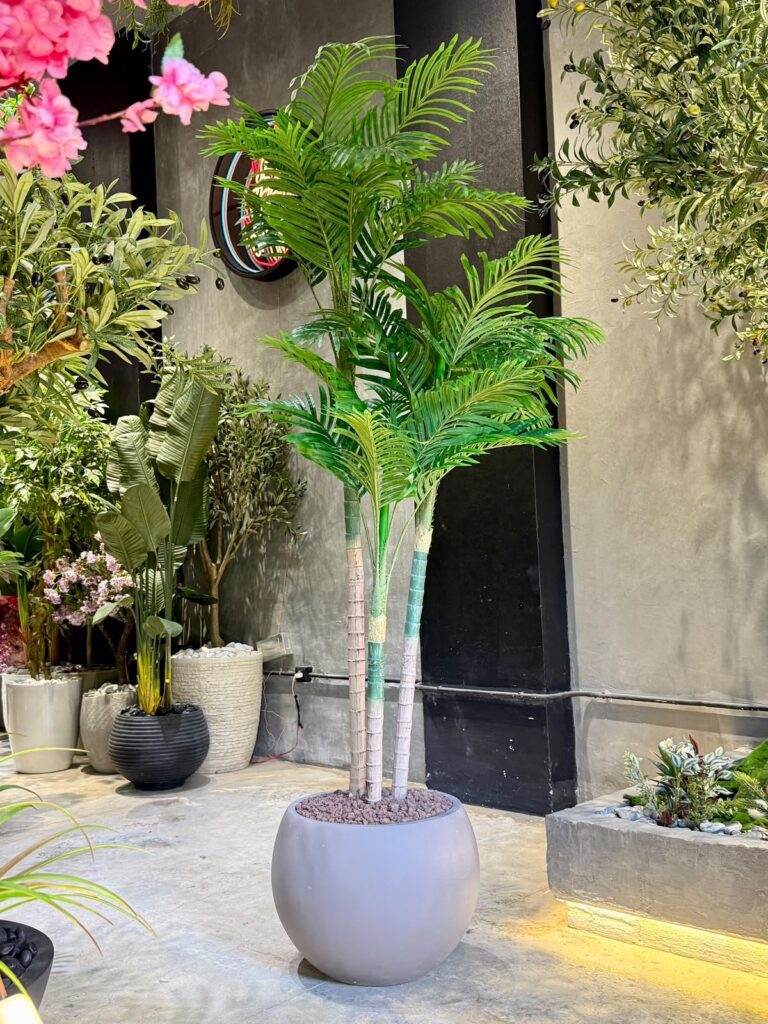
Palms, grasses, pampas, ferns and blossom trees have foliage you cannot wipe leaf by leaf. Use the hairdryer on cool, or compressed air, held 20–30 cm from the branch, and work round the tree once. The dust lifts off and falls; a cloth on the floor catches most of it. Keep the air cool: warm air softens the glue at the stem joints on some fabric foliage.
Step 3: a damp cloth for marks that dust tools leave behind
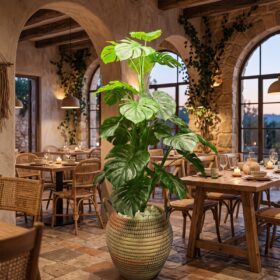
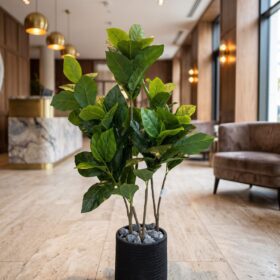
Kitchen film, fingerprints and the tide mark that forms on leaves near a window do not brush off. Wring a microfibre cloth out in plain water until it is barely damp, wipe the leaf from the stem outward, and let it dry in the air. This is for large, smooth leaves: ficus, monstera, olive, bird of paradise. Do not use it on fabric blossoms or on flocked, velvety leaves; they hold water and the colour can run.
Keep the water off the trunk. On a tree built around a preserved natural trunk, the wood is treated and sealed, but it is still wood; wipe it dry at once if it gets wet.
Step 4: the base, the pot and the pebbles
The vacuum with the brush head, on low, cleans the top of the pot, the pebbles or moss and the floor around the base. Check at the same time that the trunk does not rock in its base.
What never to use
- No cleaning products. Glass cleaner, multi-surface spray, alcohol wipes and bleach dull the leaf coating and can leave white streaks on dark foliage.
- No silicone or leaf-shine sprays. They look good for a week, then hold the next layer of dust twice as firmly.
- No shower, hose or bath on indoor trees. Water gets into the stem joints and the base, and a wet preserved trunk can stain.
- No pressure washer, even outdoors. It strips leaves off their wires.
Outdoor pieces with anti-UV foliage
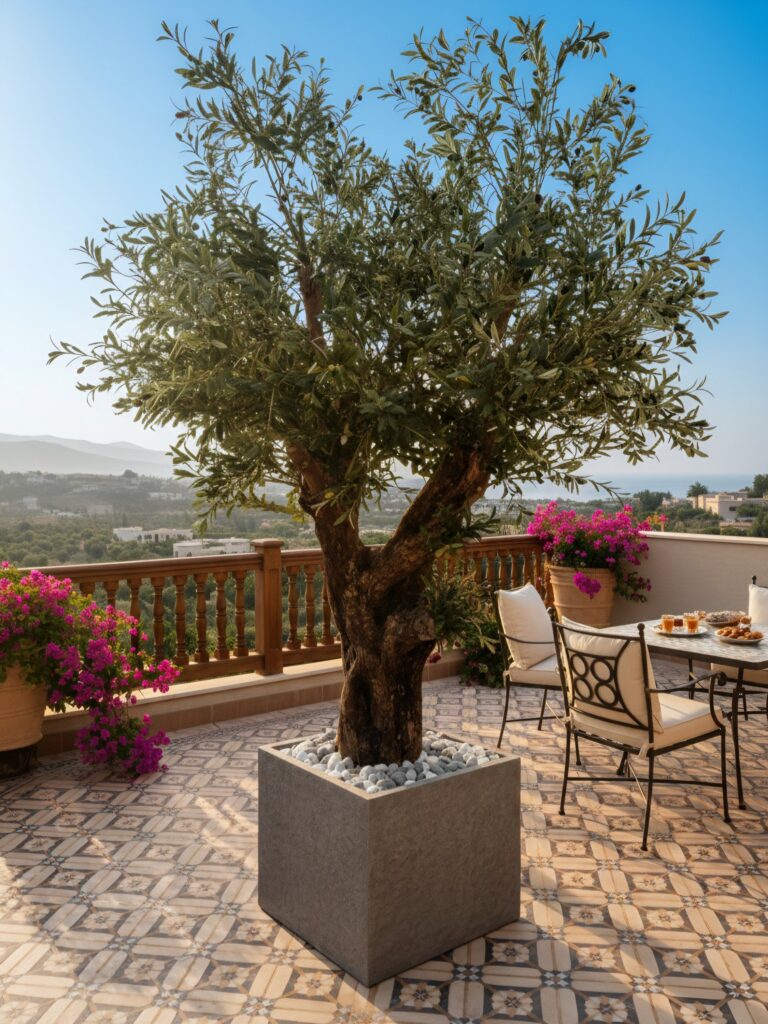
A tree on a terrace or a roof collects dust, pollen and salt from the sea air. Anti-UV foliage is made to be outside, so it can take a gentle rinse with a garden hose on the spray setting, held at arm’s length, early in the morning before the sun is on it. Let it drip dry. Keep the hose off the base and off a natural trunk, and never aim it at the point where the branches meet the trunk.
Once a year, after the winter, go over an outdoor tree branch by branch: straighten what the wind has pushed and check the weight in the planter.
How often
- Indoors, a home: a quick dust every three to four weeks, a full clean twice a year. Beirut dust and open windows make this closer to every two weeks in summer.
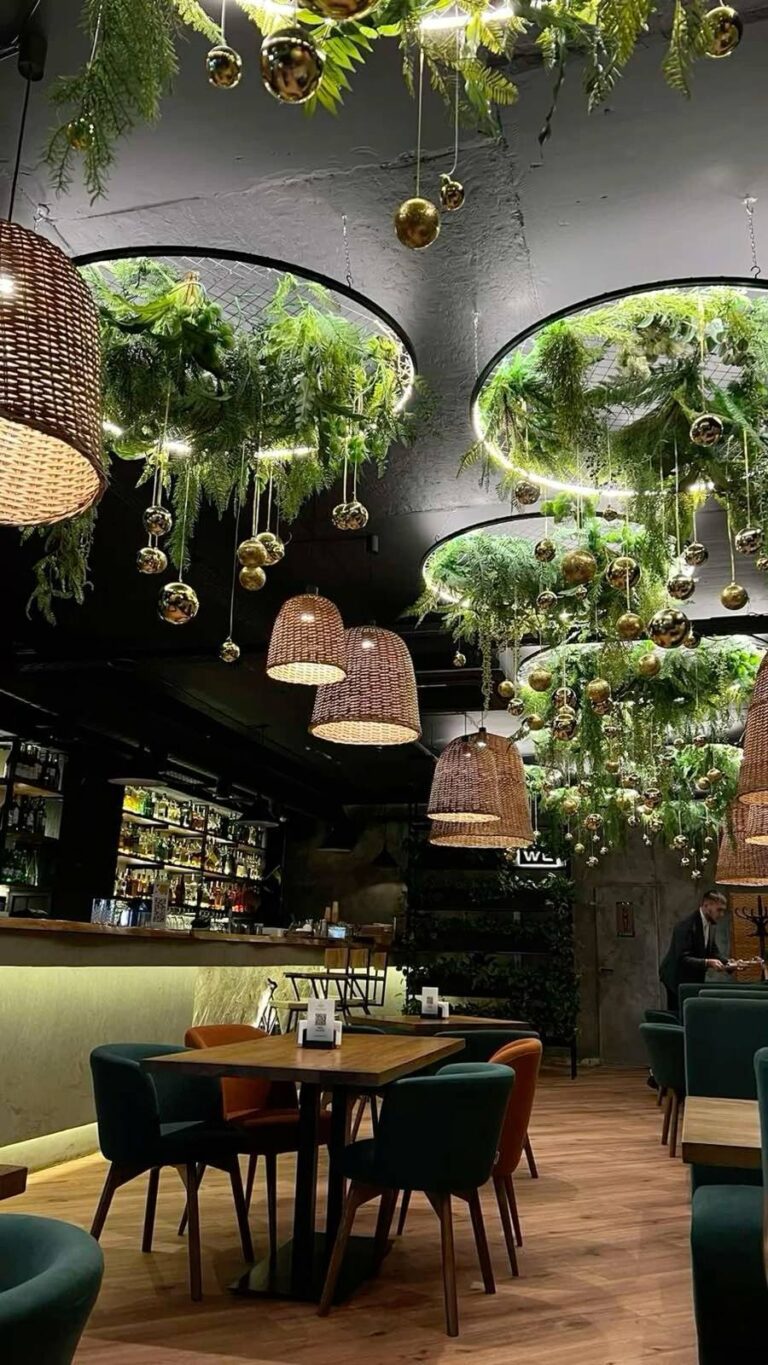
- Restaurants, cafés and lobbies: every two weeks, and the damp-cloth step monthly. Cooking fumes bond dust to the leaf.
- Outdoors: a rinse monthly in the dry months, and the branch-by-branch check each spring.
A tree dusted regularly never needs a hard clean; one left for a year needs two hours and still looks dull, because fine dust works into the leaf texture.
When cleaning is not enough
Here is the test: wipe one leaf with the damp cloth and step back. If that leaf is now clearly greener than its neighbours, the tree is dirty and the steps above will bring it back. If it is the same colour, the foliage has faded or aged, and no amount of cleaning changes that. At that point the options are to re-leaf the canopy or to replace the tree, and we explain which one makes sense in our guide to repairing an artificial tree years later.
Three other signs that it is time to call the workshop: leaves that crack instead of bend, a trunk that moves in its base, and branches that no longer hold their shape. All three are repairs, not cleaning jobs. We service the trees we build, and we will look at a tree we did not build from a photograph.
Buying with cleaning in mind
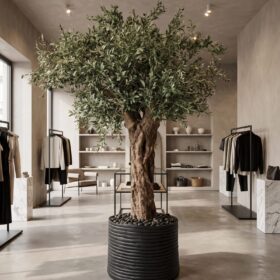
If you are still choosing, the leaf type decides the work: broad leaves are a cloth job, olive and jacaranda a brush job, palms and blossoms an air job. Pieces from our catalogue, such as the Olive Tree Fiber 180 cm, the Areca Palm 180 cm or a custom olive on a real trunk, all clean the same way. The full range is in artificial trees and plants, and trees built to your ceiling height are on the custom artificial trees page.
Frequently asked questions
Can I wash an artificial tree in the shower?
Not an indoor tree. Water gets into the stem joints and the base, and a natural trunk can stain. Dry dusting and a barely damp cloth on the large leaves do the same job without the risk. Outdoor anti-UV foliage can take a gentle hose rinse.
What is the fastest way to clean a large artificial tree?
A hairdryer on cool or a small blower, from a stepladder, top down, with a cloth on the floor to catch the dust. A 2.5 m tree takes fifteen to twenty minutes this way.
How do I clean a fake olive tree without losing leaves?
Brush the leaves in the direction they grow, holding the branch cluster with the other hand, and never shake the tree. Olive foliage is wired to its stems; brushing is fine, pulling is not.
My tree still looks dull after cleaning. What now?
Wipe one leaf and compare it with its neighbours. If there is no difference, the foliage has faded and needs re-leafing rather than cleaning. Send us two or three photos on WhatsApp and we will tell you what it needs.
Questions about a specific tree? Message us on WhatsApp or through the contact page, with a photo if you can.






Pingback: Artificial Jacaranda Tree in Lebanon | 200 cm, $130, Delivered
Pingback: How Long Does an Artificial Tree Last? Indoors vs Outdoors
Pingback: How to Clean Artificial Plants and Trees Properly - Neon Jungle Studios