

Blog
How Long Does an Artificial Tree Last? Indoors, Outdoors and in the Sun

Oct
The honest answer is that an artificial tree does not have a lifespan the way a lamp or a sofa does. Nothing in it wears out on its own. What ages a tree is three things: sunlight, dust and handling. Control those and a tree bought today looks the same in many years. Ignore them and a cheap import can look tired in one summer.
Below: what each part is made of, what the Lebanese sun does to it, and what our policy covers.
What an artificial tree is made of
A tree is an assembly of four parts, and each one ages differently.
- Foliage. Either fabric (polyester, sometimes called silk) printed and pressed into leaf shapes, or moulded plastic leaves (polyethylene, PE, the “real touch” type) with a wire or plastic vein. Blossoms are nearly always fabric. Fabric leaves are softer and cheaper; moulded leaves hold their colour and shape longer and wipe clean more easily.
- Stems and branches. Steel wire inside a plastic or latex sleeve. This is what lets you shape the canopy, and what gets bent when a tree is pushed through a doorway.
- The trunk. On catalogue trees, moulded plastic or fibreglass textured to look like bark. On our custom pieces, a preserved natural trunk, treated and sealed, with the artificial foliage built onto it. Wood is the most stable element in the tree.
- The base. A weighted plastic nursery pot, concrete or cement, or the planter the tree is set into on site.
Indoors: what actually changes over the years
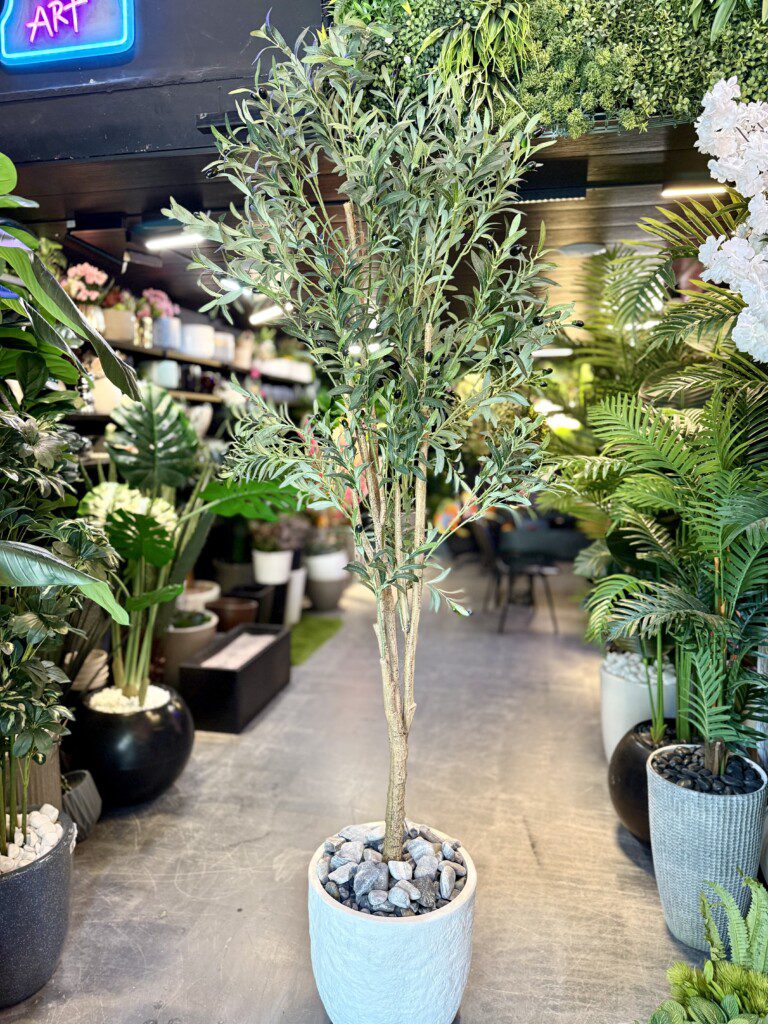
Kept out of direct sun, foliage keeps its colour; there is no light strong enough indoors to break down the dye, and nothing moves or wears. What does change indoors:
- Dust builds into the leaf texture and reads as fading. A tree dusted every few weeks never gets there; we explain the method in how to clean a dusty artificial tree.
- Window-side fading. A tree next to a south or west window loses colour on the side that faces the glass, over years rather than months. Turning it a quarter turn each season evens it out.
- Handling. Branches bent by cleaners, children or a move; leaves pulled off by curious hands at reception height. This is the most common reason a tree comes back to the workshop, and it is repairable.
Outdoors: the UV question
Ultraviolet light breaks down the dyes and the plastic in ordinary foliage. In full Lebanese sun, standard indoor foliage goes pale and chalky in one season, and the leaves then crack rather than bend. This is the single biggest reason trees fail early, and it is a specification problem, not a quality problem: the tree was never made for the terrace it was put on.
Anti-UV foliage is made with stabilisers mixed into the plastic and inks chosen for light-fastness. It does not make a tree immune to the sun; it slows the process from months to years. Three things still decide how long an outdoor tree keeps its colour:
- Exposure. A north-facing balcony or a terrace under a pergola keeps its colour far longer than a south-facing roof with eight hours of direct sun.
- Colour. Deep greens last longest. Pale pinks, lilacs and variegated cream leaves are the first to soften, outdoors and indoors.
- Wind and salt. On the coast, wind works the stem joints and salt air leaves a film that holds dust. A monthly rinse and a properly weighted base matter more than the foliage grade.
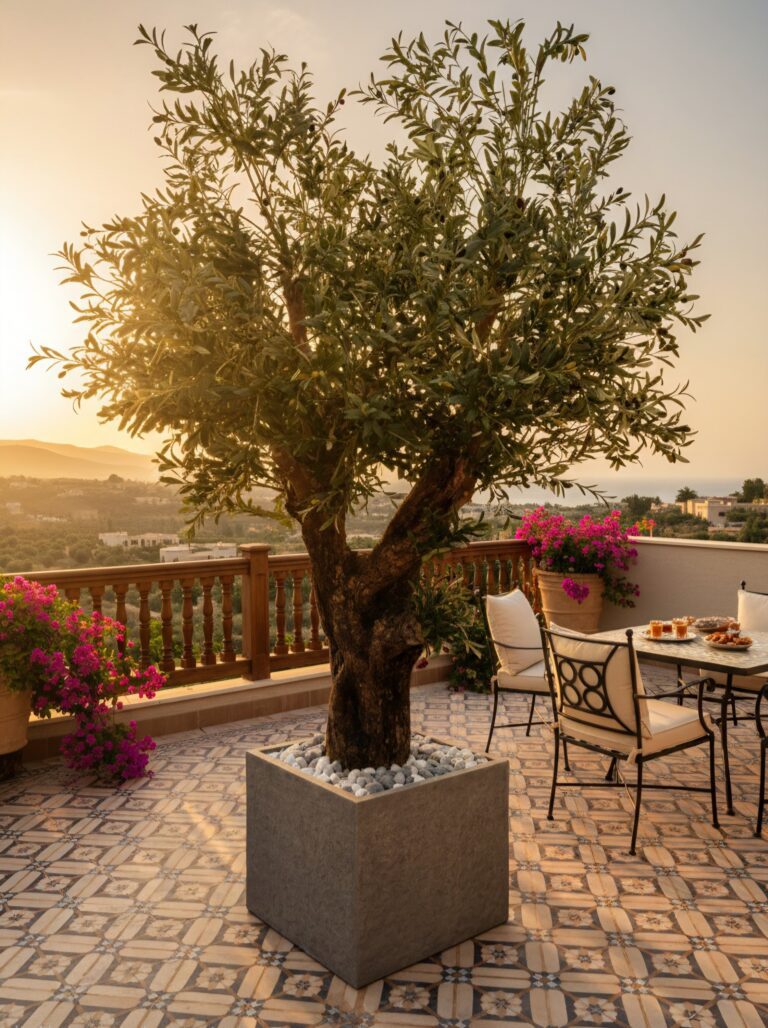
Tell us where the tree will stand before we quote. “Outdoor” changes the foliage, the base weight and sometimes the trunk finish, and it is the first thing that changes the price.
What fades first, and what does not
From the trees we have serviced, in rough order of how soon it shows:
- Pale blossoms (white and light pink cherry, lilac jacaranda) in direct sun.
- Variegated and cream-edged leaves.
- Fabric leaves on the window side of an indoor tree.
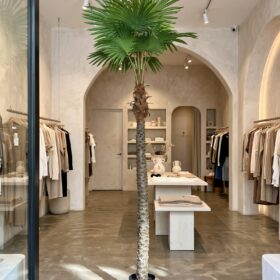
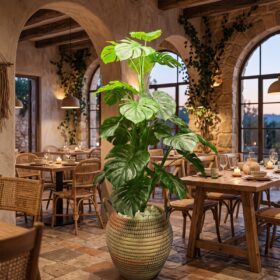
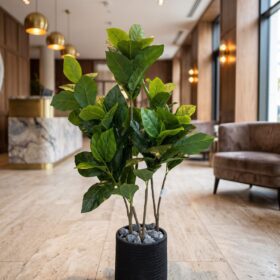
- Moulded green leaves: olive, ficus, monstera, palm fronds.
- Trunks, bases and branch wire: effectively never, unless the tree stood in rain without an outdoor build.
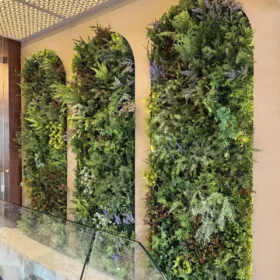
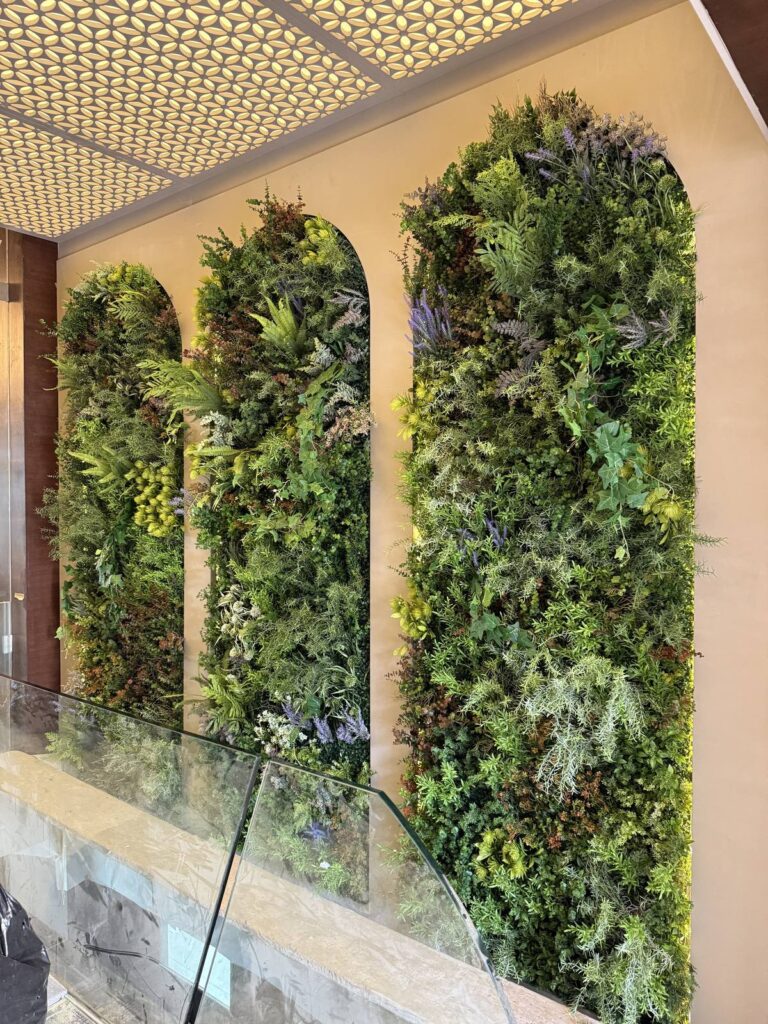
Green walls follow the same order: panels indoors keep their colour, panels on a sunny façade need the anti-UV grade. The artificial green walls page explains how we specify them.
Maintenance that adds years
- Dust every few weeks; a damp cloth on large leaves twice a year. No cleaning products, no leaf-shine sprays.
- Move a tree by the trunk, never by the branches, and take the canopy through doorways sideways.
- Outdoors: rinse monthly, check the base weight after storms, and bring pale blossom trees in for the summer if you can.
When a tree is “finished”, and when it only looks finished
A thin, pale canopy on a sound trunk is not a finished tree; it is a tree that needs new foliage. Because we build our trees in Jdeideh, a piece we made can come back to the bench and be re-leafed, reshaped or re-based, and the trunk, which is the costly part, is kept. The cases that are genuinely beyond repair are rarer: a rusted internal frame from years of rain, foliage that snaps when bent, or a trunk that cracked in a fall. We cover the difference in repairing and refreshing an artificial tree years later.
What our policy covers
We do not sell a multi-year warranty, and we would rather say so than print one that means little. What we do commit to is written in our returns and refunds policy: if a piece arrives damaged or defective, contact us within 48 hours of delivery with photos of the packaging and the item, and we arrange a repair, a replacement or a refund, and we cover the return shipping for a valid claim. After that, our workshop services what we build, at a price that depends on the size of the job, and a quick photo on WhatsApp is enough for an estimate.
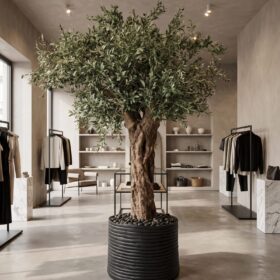
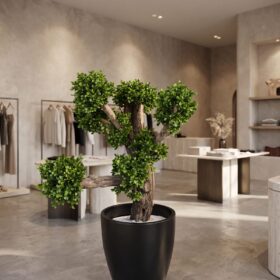
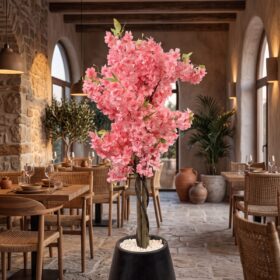
If you are choosing between a catalogue piece and a custom build with this in mind: a catalogue tree such as the Olive Tree Fiber, multiple trunks, 210 cm or the Cherry Blossom Pink 180 cm lasts as long indoors as anything we make; a custom piece on a real trunk, like the Custom Olive Tree, real wood, 300 × 200 cm, is the one to choose when the tree will live outdoors or needs to be re-leafed one day rather than replaced. Our artificial olive trees page shows both kinds.
For ready-made pieces with prices, browse our artificial plants in Lebanon, delivered across the country in about four days.
Frequently asked questions
How long does an artificial tree last indoors?
Nothing in it wears out on its own. Kept out of direct afternoon sun and dusted every few weeks, the foliage keeps its colour for many years, and the trunk and frame last indefinitely. Dust and handling are what age a tree, not time.
Do artificial trees fade in the sun?
Ordinary indoor foliage fades and goes brittle within one summer of direct Lebanese sun. Anti-UV foliage slows that to years, depending on exposure; a shaded terrace keeps its colour far longer than a south-facing roof.
Which colours fade first?
Pale blossoms and variegated leaves soften first, deep greens last longest. For a sunny terrace, choose olive, ficus, palm or cactus over cherry blossom or lilac jacaranda.
Is there a warranty?
We do not offer a multi-year warranty. Damage or defects on arrival are covered if you tell us within 48 hours of delivery with photos, as set out in our returns policy. After that, the workshop repairs and re-leafs the trees we build.
Not sure which foliage a particular corner needs? Send a photo of the spot on WhatsApp, with a note on which way it faces, or visit the showroom in Jdeideh, where indoor and anti-UV foliage stand side by side.