

Uncategorized
Neon Jungle Studios: Why We Make Everything Ourselves
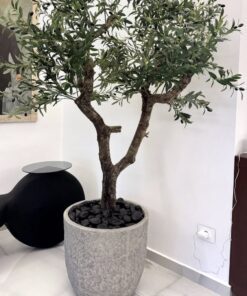
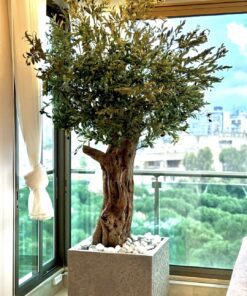
Ask where a large artificial olive tree in Lebanon came from and the answer usually stops at a shipping container. Someone picked it from a catalogue, it arrived in a box, and whatever was inside that box is what the room got. We set Neon Jungle Studios up the other way round — a workshop in Jdeideh, Metn, with the showroom attached to it — because almost every decision that makes greenery look convincing is made during fabrication, not at the moment of ordering.
This is the part of our business people find surprising: we are a manufacturer first. Nothing is bought finished and resold under our name.
A catalogue decides for you. A workshop doesn’t.
When a tree is imported ready-made, the important choices were settled months earlier by someone who never saw your space. Height comes in fixed steps. Canopy width is whatever it is. The trunk is moulded plastic, and the foliage is whatever was loaded into that production run — usually indoor-grade, regardless of where the tree ends up standing.
You then spend the rest of the project working around those decisions. The tree is thirty centimetres too tall for the soffit, so it gets trimmed badly. The canopy is too narrow for the corner it was meant to fill, so two more plants appear beside it to compensate. It was never meant for a terrace, so a summer later the leaves have gone pale.
Building in-house removes the compromise at its source. On a custom artificial tree we work to the dimensions of the actual space — measured ceiling height, the width the tree is allowed to occupy, the sightline it has to sit inside. A tree made to 3.2 metres is made to 3.2 metres, not rounded to the nearest size in a catalogue.
What making it ourselves changes, concretely
The trunk is a real one
We build on preserved natural trunks. Bark is the detail the eye checks first and instinctively — the splits, the knots, the places a branch was lost years ago. No mould reproduces that convincingly, because a mould repeats itself and real bark never does. Working from real trunks means each tree we make is physically different from the last, which is the whole point.
Foliage is chosen for where the piece will live
An indoor lobby and a west-facing terrace in July are not the same brief. Because we specify the foliage per project, an outdoor piece gets anti-UV foliage from the start rather than ordinary leaves that will fade. It costs a conversation at the beginning and saves a replacement later.
Density is a judgement, not a default
Foliage density is where most artificial trees give themselves away — too sparse and the structure shows, too uniform and it reads as a factory product. Building leaf by leaf in our own workshop means that judgement is made by a person looking at the tree, and adjusted until it stops looking made.
The base is engineered for the actual location
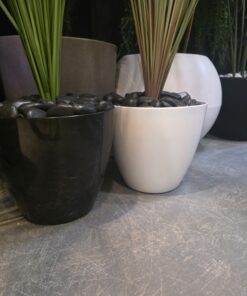
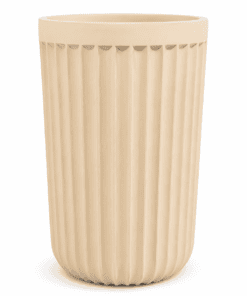
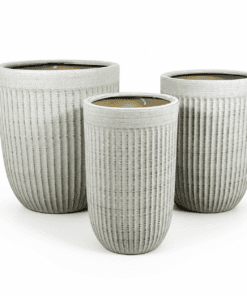
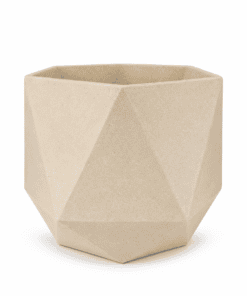
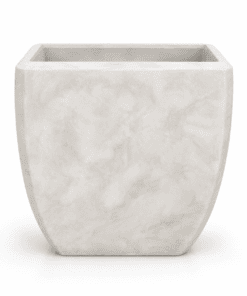
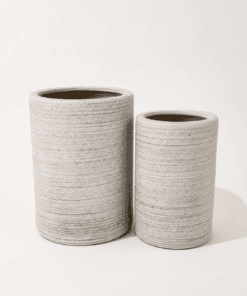
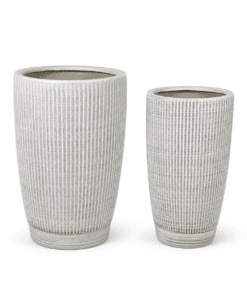
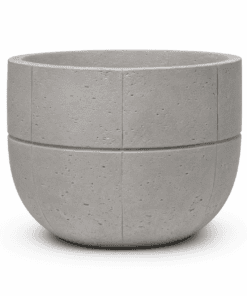
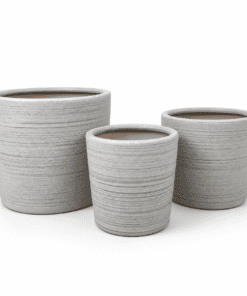
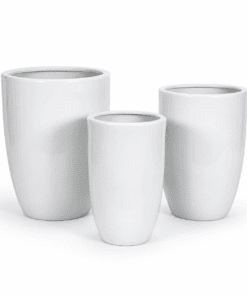
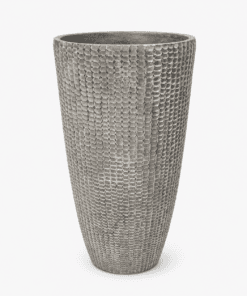
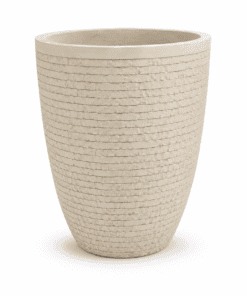
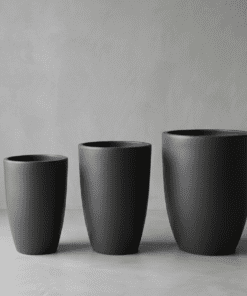
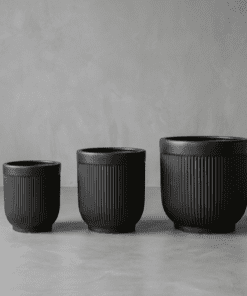
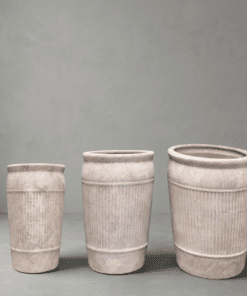
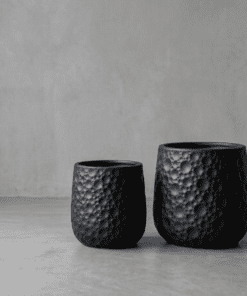
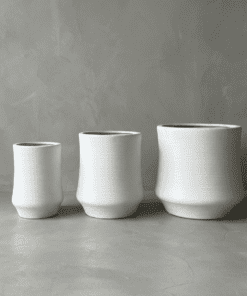
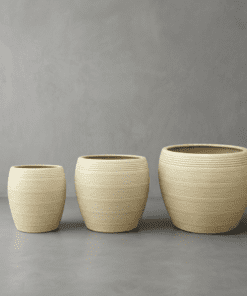
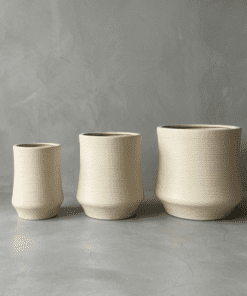
A tree standing in a windy villa entrance needs different weighting from one in a quiet reception corner. When the same studio builds the tree and the planter it stands in, the two are designed as one object rather than matched after the fact.
Showroom and factory in the same building
The workshop in Jdeideh sits behind the showroom, facing St. John Greek Orthodox church. That arrangement is practical rather than decorative: you can come in, handle the foliage, see the bark on a finished trunk, stand next to something at the height you are considering — and then discuss changing it, because the people who would make those changes are in the next room.
It also means we answer for our own work. There is no supplier to blame if a canopy comes out wrong. It gets rebuilt here.
Greenery, neon, planters and sculpture under one roof
The same logic applies across everything we make. Neon signs, 3D letters, green walls, planters and sculptural pieces are all fabricated in the same workshop, which matters more than it sounds: a restaurant fitting out a wall usually wants the greenery and the sign to sit together, in proportion, finished to the same standard. When one studio makes both, that coordination happens during production instead of in a panic on install day.
Elie Saab’s headquarters signage and an olive tree for his apartment came out of this same workshop — the same trunk selection, the same finishing, the same people.
What it means for your project
Practically: you can specify what you want rather than choose from what exists. You can change your mind about height or canopy shape while the piece is still being built. You can see the work in progress. And when it is finished, we deliver and install it ourselves, anywhere in Lebanon, rather than handing you a flat-packed box.
The trade is time. A tree made for your space is not a next-day purchase — custom trees typically take around 20–25 working days. For a piece that will stand in a room for years, that has proved to be a trade most clients are happy to make.
Frequently asked questions
Do you import any of your trees?
We fabricate in our own workshop in Jdeideh. Raw materials — foliage, preserved trunks, metals — are sourced, but the trees, walls, planters and signs themselves are built here.
Can I visit the workshop before ordering?
You are welcome at the showroom in Jdeideh, facing St. John Greek Orthodox church, where finished and in-progress pieces are on display. Call ahead and we can usually show you work being built.
Can you match a tree to a photo or a drawing?
Yes. A photograph of the space with an approximate height, or an architect’s elevation, is normally enough for us to propose a species, size and canopy shape.
Do you install outside Beirut?
We deliver and install nationwide, and large pieces are always installed by our own team.
Come and see how it’s made
If you have a space in mind, send us a photo and a rough height and we will tell you honestly what would work in it. Message us on WhatsApp or through our contact page, or visit the showroom in Jdeideh, Metn — the workshop is right behind it.