

Uncategorized
Greenery for a Lebanese Restaurant: What Works and What Dies
Greenery in a restaurant has to do two things: soften a room full of hard surfaces, and still be doing it eleven months later, when nobody has thought about it since opening night. Most plans fail the second test, not the first — and the mistake is rarely the choice of plant. It is putting something living where nothing living can survive, in a business where nobody has time to notice it dying.
The three conditions that kill plants in a restaurant
A dining room is one of the hardest environments a plant can be asked to live in, and the reasons are structural rather than bad luck.
Light that suits diners, not leaves. Evening service runs on low, warm, directional light. It flatters faces and food, and gives a ficus almost nothing to work with. Anything placed away from a window is on borrowed time from the day it arrives, and the decline is slow enough that nobody notices until the plant is already thin and leggy.
Air that never stops moving. Extraction over the pass, split units above the seating, doors opening onto the street all evening. Dry moving air plus sharp swings between a closed afternoon and a full room: leaf edges brown and watering becomes guesswork.
Nobody whose job it is. The decisive one. Plants that belong to everybody belong to nobody. Watering happens when someone remembers — either not often enough, or far too much.
What still works as a real plant
Real greenery is not off the table. It just has to sit somewhere it can survive, with someone who will realistically look after it.
- A bright sill or sunny terrace edge — herbs, succulents, small citrus, which often tie into the menu.
- Cut stems on tables, treated as a weekly consumable like linen rather than a plant to maintain.
- One or two feature plants in daylight, with a named person responsible.
The rule of thumb: if you cannot say who waters it and on which day, do not put a living plant there.
Where artificial earns its place
The structural greenery — what defines the room rather than decorates it — is where fabricated pieces make sense. These are the positions where failure is expensive and visible.
Dividing the room
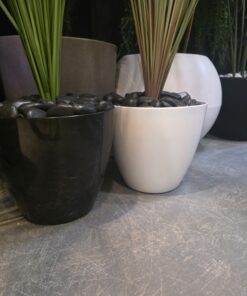
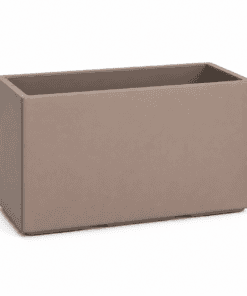
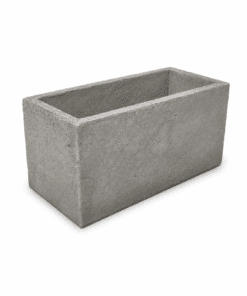
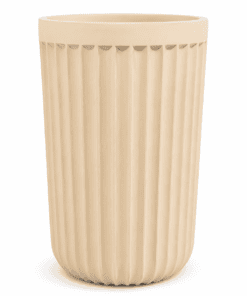
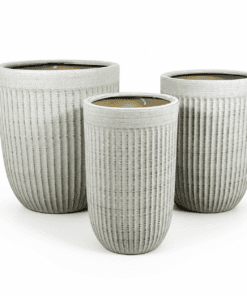
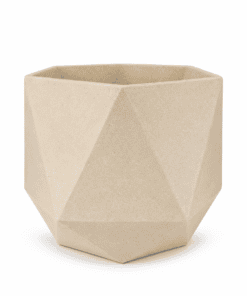
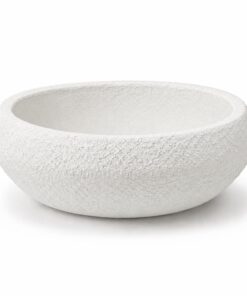
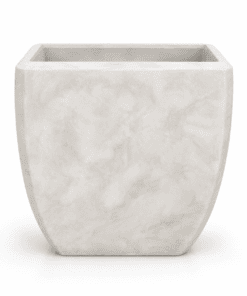
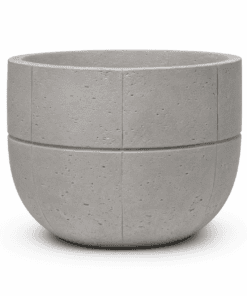
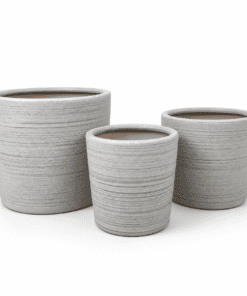
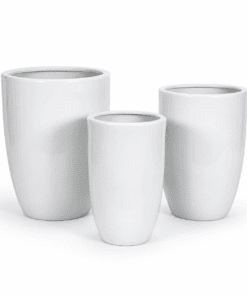
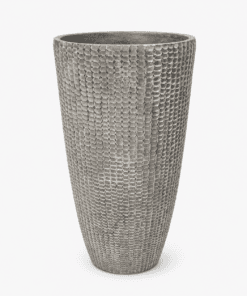
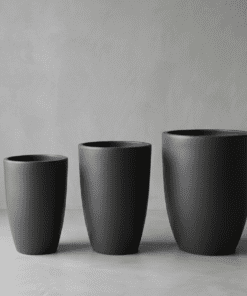
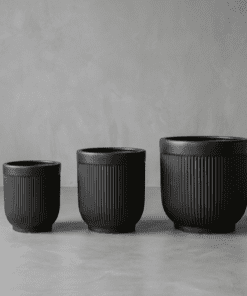
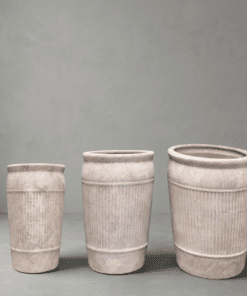
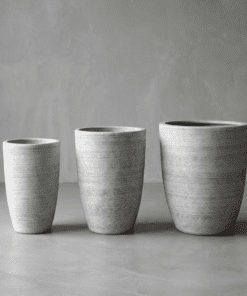
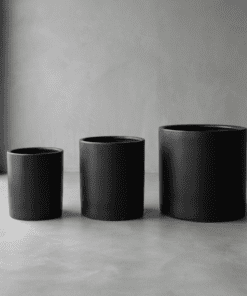
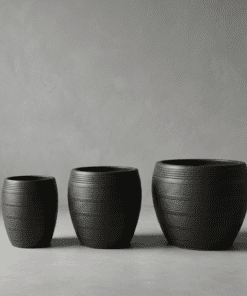
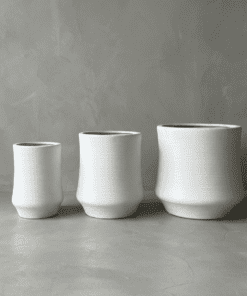
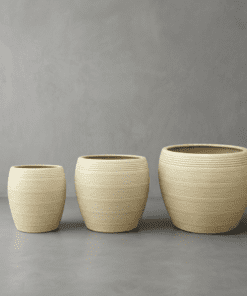
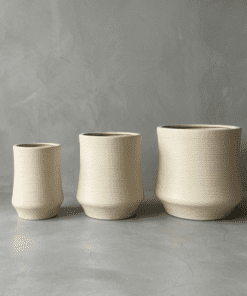
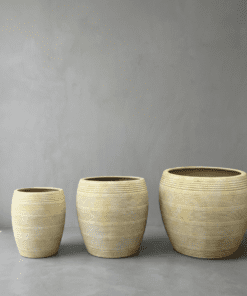
Booth separators, screens between bar and dining area, a planted spine down a long room. Greenery is the friendliest way to break a space without building walls, and it has to look identical in month one and month thirty. The planter does as much work here as the foliage, so custom planters sized to the exact gap between seating beat whatever standard box is available.
Walls and dead corners
Every restaurant has a wall that does nothing — beside the stairs, behind the waiting bench, along the corridor to the toilets. Those are the walls a camera catches by accident. An artificial green wall takes no floor space, needs no irrigation and does not stain the plaster behind it. Where nothing would grow and nothing could be watered, it is the only option that keeps looking deliberate.
The single large tree
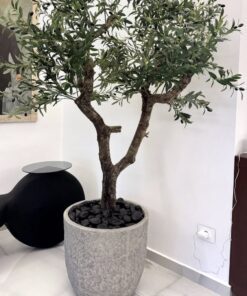
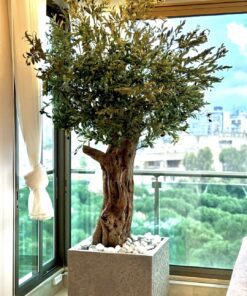
One well-made tree in the right position does more for a dining room than a dozen scattered pots. Stairwells, double-height voids, the corner a long banquette turns — these want vertical volume. The artificial olive tree is the piece we are asked for most in Lebanese hospitality, and for good reason: it belongs to the landscape, the silhouette reads instantly, and a preserved trunk gives it the weight a feature piece needs.
Terraces and street frontage
Outdoor seating is the hardest position of all: summer sun, street dust, wind, and irrigation that either does not exist or leaks onto the pavement. Terrace foliage must be anti-UV, or it shifts colour through one Lebanese summer and looks tired by autumn. Weighting matters as much — a tall piece catching wind on an exposed frontage needs anchoring, not propping.
What separates convincing from cheap
Diners sit beside greenery for an hour or more — a far harder test than a lobby someone walks through. Three things decide whether a piece survives that distance:
Density. Thin foliage is the clearest tell. A branch showing daylight where a real one would not reads as fake from across the room, before anyone examines a leaf.
The trunk. A moulded plastic trunk fails at arm’s length. A preserved natural trunk does not — it is real wood with real bark, and it is what a guest’s hand finds.
Scale. A tree bought at a standard height because that is what was in stock ends up short of the ceiling or jammed against it. Pieces made to the measured height of the room sit correctly, and the difference is obvious even to people who cannot say why.
That is why we build in our own workshop in Jdeideh rather than order from a catalogue: canopy width, trunk character, planter dimensions and foliage mix are set against your room, then delivered and installed. Seeing a piece in the showroom tells you more about density than any photograph.
If the budget has to be staged
This order gives a dining room the most for the least: the feature tree in the position with the most sightlines, then any greenery that divides seating, then the dead wall that photographs badly, then terrace and frontage specified for outdoor use. Table-level greenery comes last — it is the easiest thing to change later.
FAQ
Will guests be able to tell the greenery is artificial?
Quality decides it. Dense foliage on a real preserved trunk holds up at close range; thin, uniform foliage on a plastic trunk does not.
How do you clean greenery in a restaurant?
A soft brush or low-pressure air, and a damp wipe on larger leaves. Near the pass, where airborne grease settles, expect to do it more often than in the dining room.
Can artificial greenery go on an open terrace?
Yes, provided the foliage is specified as anti-UV for outdoor use and the piece is weighted or anchored for wind. Indoor foliage moved outside will fade.
How long does a custom tree take to make?
Around 20–25 working days, depending on size and the trunk. Green walls and planters vary with area and finish.
Planning a restaurant fit-out?
Send the plans, a few photographs, or simply the ceiling height and the corner you are trying to solve. We fabricate everything in-house in Jdeideh, Metn, and install nationwide.
Message us on WhatsApp, see our restaurant greenery page, or use the contact page. The showroom in Jdeideh, facing St. John Greek Orthodox church, is open to visit.