

Uncategorized
Office Greenery Without Maintenance: A Practical Guide
Nobody in an office is actually paid to water the plants. That single organisational fact explains most of what goes wrong with greenery in a workplace: the pots arrive with the fit-out, somebody kind looks after them for a few months, that person changes role or leaves, and by the following summer reception is decorated with three stems and a lot of dry soil. The plants did not fail. The arrangement around them did.
Which is why artificial greenery suits offices better than almost anywhere else. A workplace has a strict appearance standard, no gardener, dry conditioned air, long weekends with the lights off, and desks far from any window — precisely the conditions living plants cope with worst. Here is how to plan greenery for one so it still looks deliberate three years in.
Start with the floor plan, not the plant list
The common mistake is to decide on a number of plants and then look for places to put them. Greenery in an office earns its place by doing a job, and the jobs differ by zone.
Reception and the lift lobby
This is the only part of the office most visitors will ever see, and usually the part given the least floor space. One considered piece beats a scattering of small pots: a single tree beside the desk, or a green wall behind it carrying the logo. A wall is often the better answer in a tight lobby because it uses the surface nobody else is competing for — an artificial green wall turns dead plasterboard into the backdrop of every photograph taken at that desk.
Open-plan areas
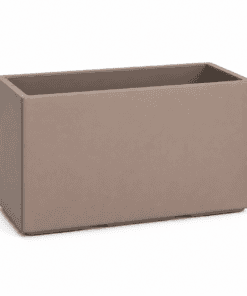
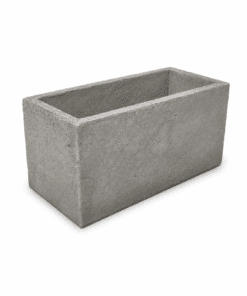
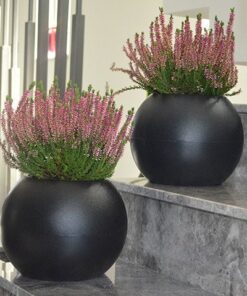
Here greenery is doing visual work, not decoration. The useful move is screening: a run of planters at roughly seated eye level between desk clusters, so people get a sense of enclosure without cubicle walls. At that height the planters are furniture, so sizing them to the module of the desk layout — rather than buying whatever standard pot is available — is what makes the result look designed instead of improvised.
Meeting rooms
Meeting rooms are now camera rooms. Anything placed in one appears in the background of calls for years, so think about what sits behind the chair at the head of the table. A modest piece in frame reads as considered; a large tree crowding the corner reads as clutter on a 16:9 crop. Go smaller here than instinct suggests.
Corridors and dead corners
Every office has a corner nothing fits in. A tall, narrow tree is one of the few things that solves it, because it occupies volume rather than footprint — a slim trunk takes a few centimetres of floor and fills the empty air above it.
What “zero maintenance” honestly means
It does not mean nothing at all. Artificial greenery needs no water, light, feeding, repotting or seasonal replacement — but it does collect dust, faster than people expect in an office running air conditioning most of the year. The whole burden is a dry microfibre cloth or soft brush on the foliage a few times a year, which the cleaning contractor can absorb into an existing schedule. That is the real trade: a weekly task that needs someone to care, swapped for a quarterly one that needs nobody to.
Material choices that matter in a workplace
Three things separate greenery that still looks right years later from greenery that starts to look like a prop.
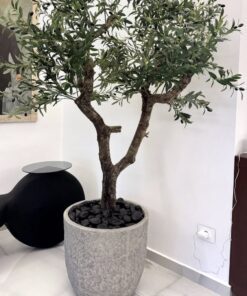
- Preserved natural trunks. Up close, in daylight beside a window, the trunk is what gives a tree away. Real preserved wood has bark that reads correctly at arm’s length — which matters where people sit next to the thing all day rather than walking past it once.
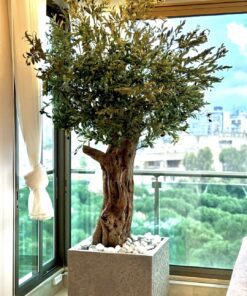
- Anti-UV foliage where there is glazing. Offices with full-height glass are brighter than most interiors. Anywhere a piece sits in direct sun for part of the day, outdoor-grade anti-UV foliage is worth specifying even though the location is technically indoors.
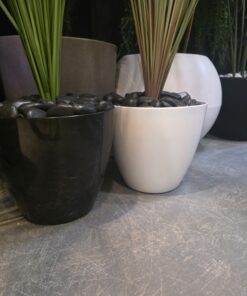
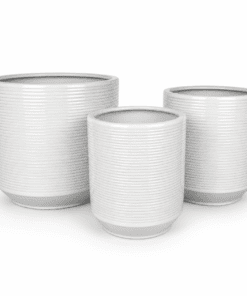
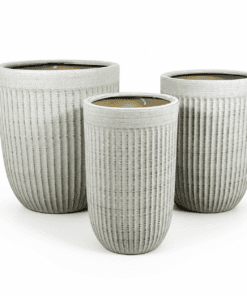
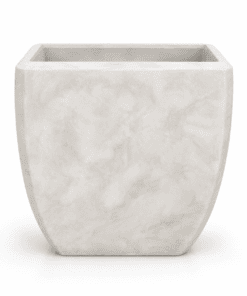
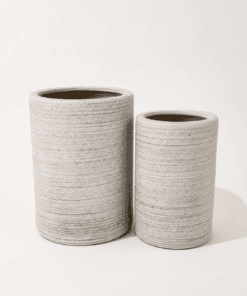
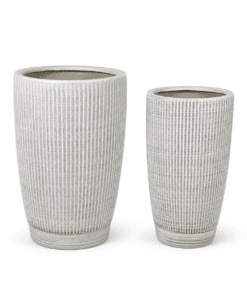
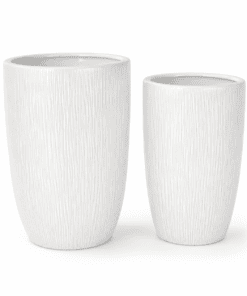
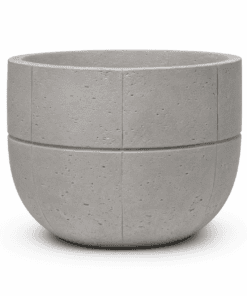
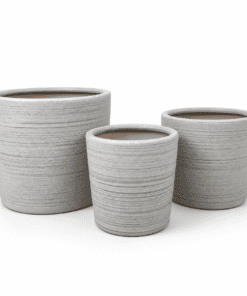
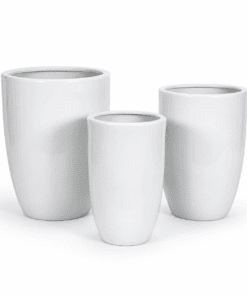
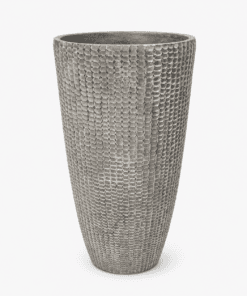
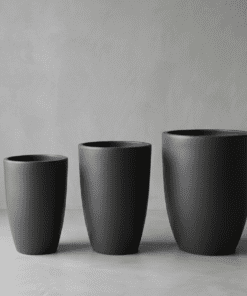
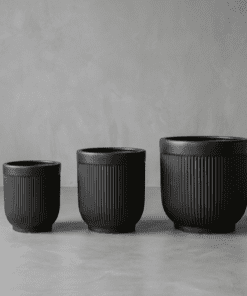
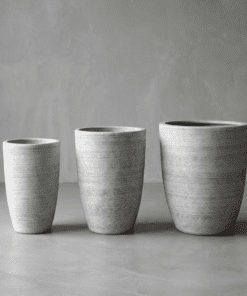
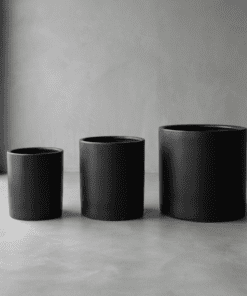
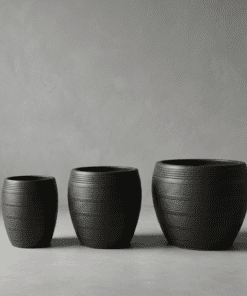
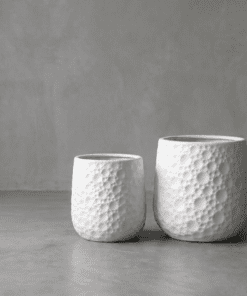
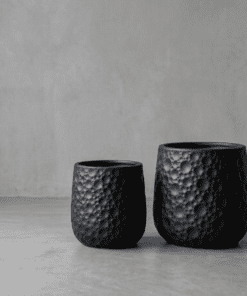
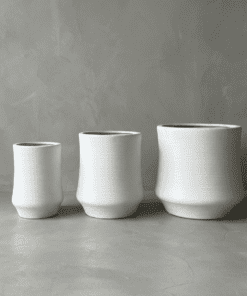
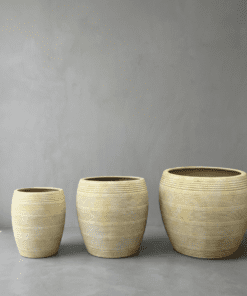
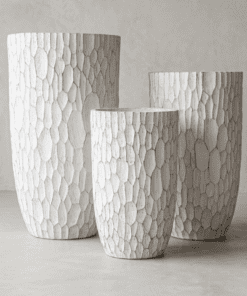
- Planters matched to the fit-out. The foliage is chosen once; the planter has to live with the joinery, the flooring and the brand palette. Having planters made to size and finish is usually the difference between greenery that looks specified and greenery that looks bought.
Scale is the decision people get wrong
Offices have higher ceilings than homes, and greenery sized for a living room disappears in them. A tree that looks generous in a showroom can look apologetic under a three-metre slab. As a rule of thumb, the canopy should reach into the upper third of the wall behind it, or the eye reads the piece as undersized. Trees here are built to a measured height and canopy spread rather than picked off a shelf, so the sound approach is to send the ceiling height and a photo of the corner and have the piece made to suit — allow roughly 20–25 working days for a custom tree.
Phasing a fit-out
Greenery is nearly always the last item in an office project and the first cut when the schedule tightens. A practical way around it: treat reception and the client-facing meeting room as phase one, and open-plan screening as phase two, once the desks are in and it is clear which sightlines need breaking up. Multi-floor projects are handled the same way, zone by zone — see commercial installations. Delivery and installation cover the whole country.
FAQ
Will artificial greenery look cheap in a corporate office?
That depends on the trunk, the foliage grade and the planter — not on the fact that it is artificial. A piece built with a preserved natural trunk and a planter matched to the interior reads as part of the fit-out. A plastic pot with a moulded stem does not, anywhere.
How much upkeep does it really need?
Dusting the foliage a few times a year. No watering, no light, no replacements, and no one in the office who has to remember.
Can greenery be combined with our signage?
Yes, and reception is the natural place for it. A logo or wordmark mounted onto a green wall is one of the most requested combinations, and both elements are made in the same workshop, so mounting is resolved before anything reaches site.
Planning greenery for an office?
Send the ceiling heights and a few photos of the areas you have in mind, and you will get a straight answer about what suits each one. Message the workshop on WhatsApp or use the contact page. Everything is fabricated in-house in Jdeideh, Metn, and the showroom there — facing St. John Greek Orthodox church — is open if you would rather see trunks, foliage and planter finishes in person first.