

Blog
The Artificial Olive Tree: Lebanon’s Signature Interior Piece
Drive inland from almost any point on the Lebanese coast and the terraces begin: dry stone walls holding up thin soil, and on them olive trees that were already old before anyone now living was born. That history is the real reason the olive is the tree people ask us for more than any other. It photographs beautifully, but it also means something here before it ever enters a room — and that is a head start no other tree gives you.
Here is the artificial olive tree as a product: why it works indoors, what separates a convincing one from a decorative one, and what to settle before you order.
Why the olive works indoors when other species struggle
Most large indoor trees fail the same way: the canopy reads as one solid mass, it kills the light behind it, and the eye registers “object” rather than “tree”. The olive avoids all three by its nature.
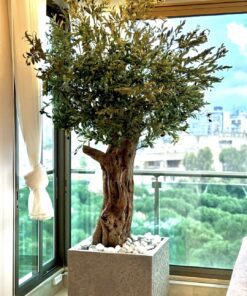
- The canopy is open. Light passes through it, so an olive can stand in front of a window without turning the glass into a dark patch.
- The leaf does two colours at once. Narrow, matte green on top, silvery underneath. A canopy full of them shifts tone as you move around it instead of sitting flat.
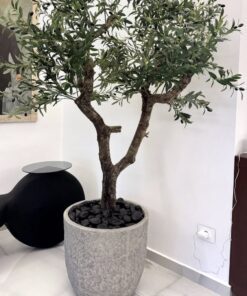
- The trunk is the feature, not the support. Gnarled, twisted, asymmetric — closer to sculpture than to a stem. On a good olive, the trunk carries the piece and the foliage simply confirms it.
- The palette is neutral. Grey-green and pale bark sit comfortably with stone, oak, brass, plaster and raw concrete.
What separates a convincing olive tree from a decorative one
The trunk
We build our olive trees on preserved natural trunks, so the bark is a real record of growth — splits, hollows, the knuckle where a branch was lost — rather than a moulded texture. Moulded trunks give themselves away at close range because they repeat: the same groove appears three times on one tree.
The canopy
Convincing foliage is uneven. Real branches reach different lengths, some sections are denser than others, and light comes through the gaps. A canopy trimmed into a perfect dome or packed to uniform density is the most common reason a tree reads as fake from across a room.
Proportion
A thick, characterful trunk under a small canopy looks like a stump with a hat; a slim trunk under a heavy canopy looks unstable even when it isn’t. Because we build each tree in our own workshop in Jdeideh, the canopy is grown to suit the trunk in front of us.
Getting the size right
Height is the decision people get wrong most often, almost always by going too small. An olive tree that stops well short of the ceiling reads as a large houseplant. One that reaches up into the volume of the room reads as architecture.
Two measurements settle it. First, ceiling height minus a clear gap, so the top leaves are not crushed against the slab — that gap is part of the effect, not wasted space. Second, canopy spread, which has to leave a comfortable path around the tree; a beautiful tree everyone edges past becomes an irritation by the second week.
Both are specifications, not constraints. Our custom artificial trees are built to the height and spread you give us, including the awkward cases — a stairwell, a double-height void, a mezzanine seen from above.
Indoors, on a terrace, or at the entrance
An olive tree is equally at home inside and out, provided it is specified for where it is going. Outdoor trees are built with anti-UV foliage so the summer sun doesn’t bleach the canopy, and they need weighting suited to the wind at that spot — a rooftop in Beirut and a sheltered courtyard are not the same brief.
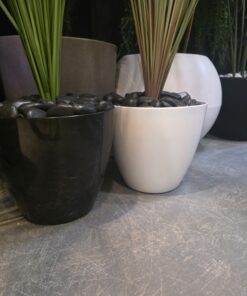
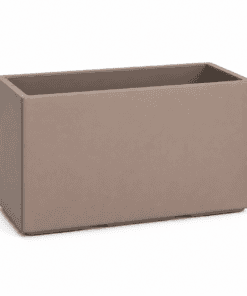
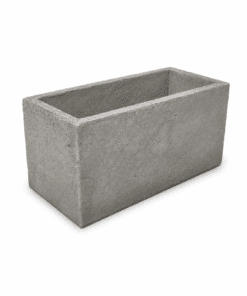
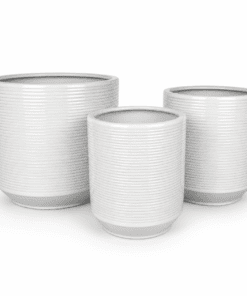
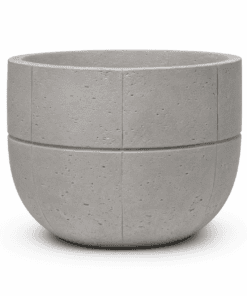
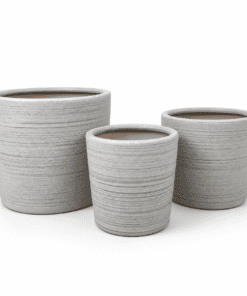
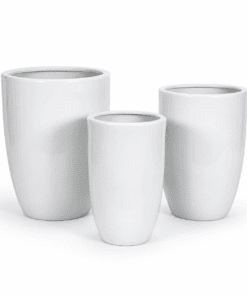
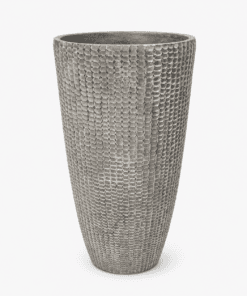
The planter matters more than most people expect: it sets the visual base and does the physical work of keeping the tree stable. Getting a tree right and standing it in an undersized pot undoes half the effect, which is why we make custom planters sized to the tree they hold.
Where olive trees earn their place
Restaurants use them to break long sightlines and soften rooms full of hard surfaces. Hotel lobbies use them for scale, filling height furniture cannot. Offices use them as the one piece of greenery nobody has to water. In homes they go where a real tree would never survive — an interior corner with no daylight, a landing, beside a staircase. We also built an olive tree for Elie Saab’s apartment.
Ordering one made for your space
The most useful thing to send first is a photograph of the actual corner, the ceiling height, and whether the spot is indoors or exposed. From there we can talk about trunk character, canopy density and planter before anything is built.
Custom trees take roughly 20–25 working days to make, and we deliver and install anywhere in Lebanon. If you would rather see the work before committing, the showroom in Jdeideh — facing St John Greek Orthodox church — has trees you can walk up to and touch, which settles more questions than any photograph.
Frequently asked questions
Do artificial olive trees look real close up?
At arm’s length people judge the trunk, and ours are preserved natural trunks, so the bark is real. The foliage is artificial and close inspection will tell you so; what matters is that the tree reads correctly at the distance it is actually seen from.
Can an olive tree go outside on a terrace?
Yes, if it is built for it. Ask specifically for anti-UV outdoor foliage and an appropriately weighted base, and tell us how exposed the position is so the anchoring suits it.
What size should I choose?
Measure the ceiling height, decide how much of that volume the tree should occupy, then check the canopy spread against the walking space. Since we build to size, the answer is usually taller than your first instinct.
Do I need to maintain it?
No water, no light, no pruning. Occasional dusting of the foliage is the whole routine.
Talk to the people who build it
Everything we sell is made in our own workshop — see the process on our artificial tree factory page, or browse the artificial olive trees we make.
Send us a photo of the space on WhatsApp and we will tell you what would work in it, or reach us through the contact page.